


We believe in RESPONSIBLE Energy
Our Commitment:
We believe in responsible energy infrastructure that respects both environmental integrity and community needs. The Haw River Assembly stands firmly against unnecessary pipeline projects that threaten our waterways, disrupt ecosystems and endanger our communities. Through community organizing, scientific analysis and persistent advocacy, we have successfully fought against harmful projects and will continue to do so.
This page covers our various initiatives against unsustainable and unnecessary pipelines, drilling, fracking and other energy infrastructure project that could jeopardize the environment and our communities’ health.
How We Fight:
Scientific Analysis: We conduct thorough reviews of environmental impact statements and provide expert testimony on water quality concerns.
Legal Advocacy: We partner with environmental law organizations to challenge flawed permits and regulatory processes.
Community Organizing: We empower local residents with information and resources to make their voices heard in regulatory processes.
Coalition Building: We work alongside environmental justice communities, landowners, and other stakeholders to build powerful alliances.
Chatham County’s Proposed Pipeline


Why Haw River Assembly cares about data centers:
Sign up HERE to receive emails from our coalition on this issue.

Data centers are water-intensive facilities that consume millions of gallons daily for cooling, putting direct pressure on local water sources and the communities that depend on them. In North Carolina, rapid data center expansion is also driving demand for new fossil fuel infrastructure, including pipelines like the proposed SSEP, which threatens the Haw River watershed. As stewards of this river and the people who rely on it, HRA tracks data center development because its impacts on water quality, water quantity, and climate are impossible to separate from our mission. Until data centers are sustainable entities that give back to the land instead of extracting from it, we will be in this fight.
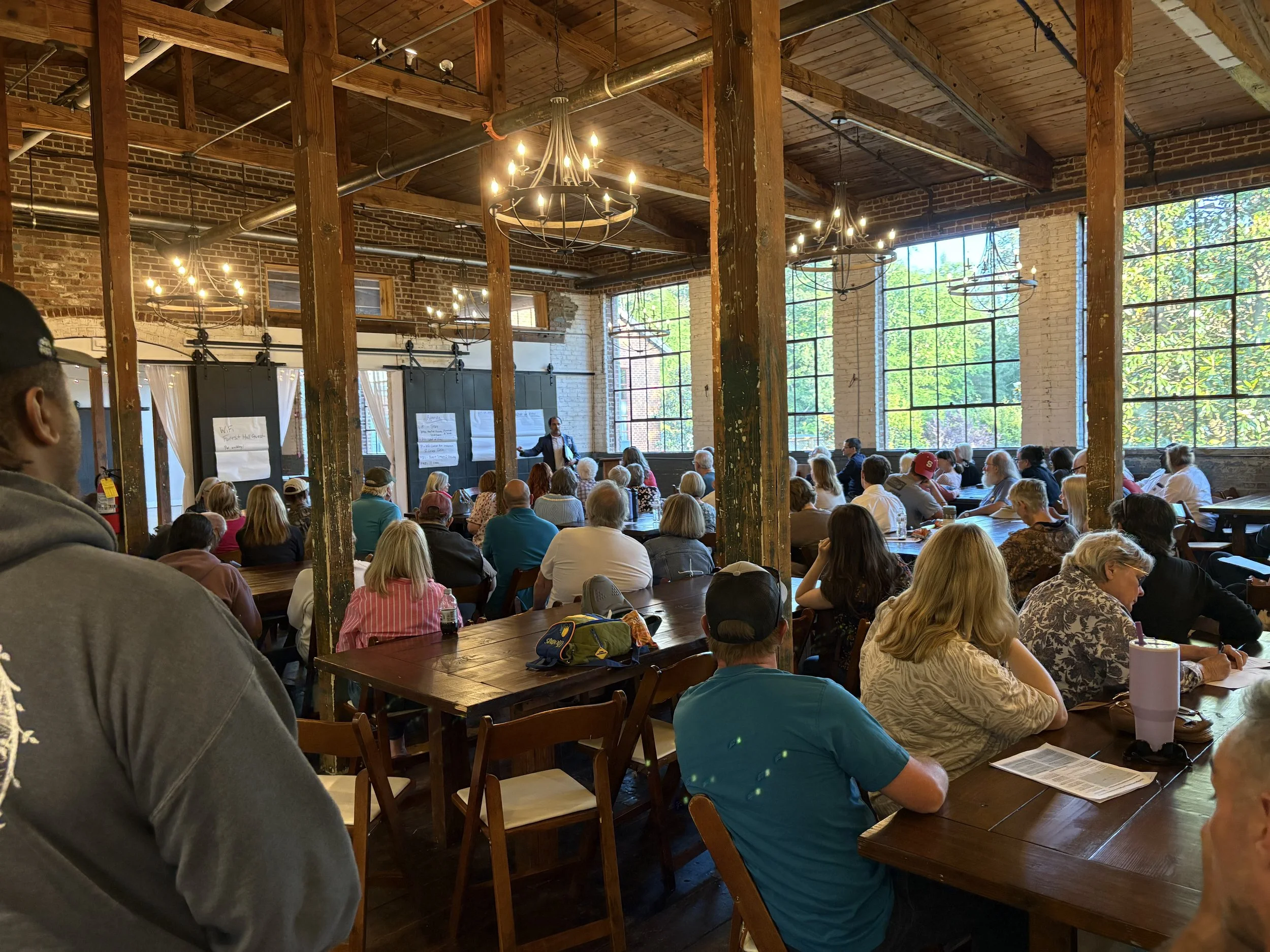
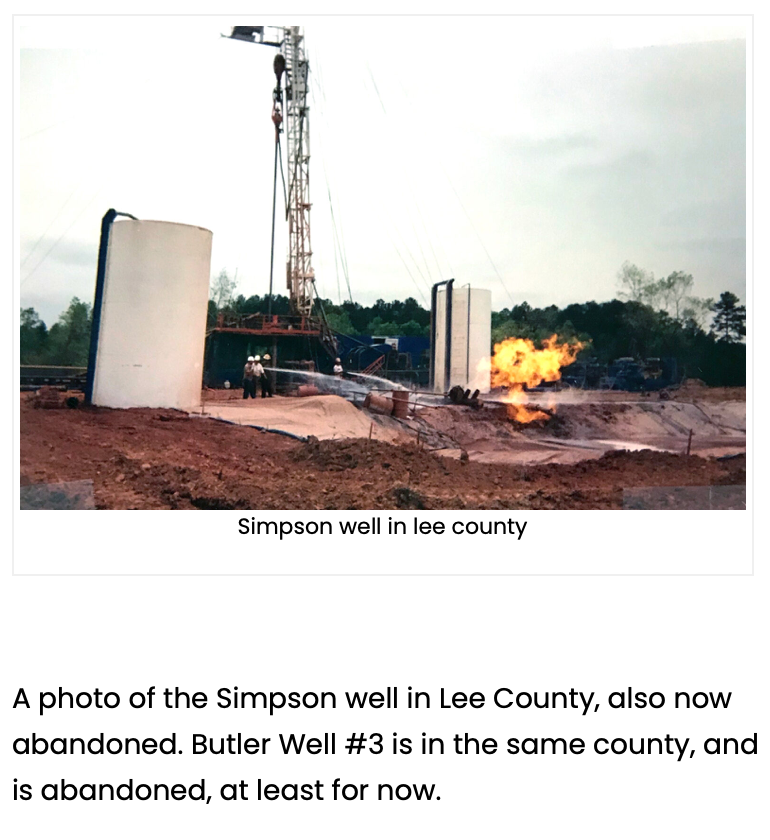
Drilling and potential fracking in Lee County, near Sanford. Our partner Clean Water for NC.
Developers Want to Extract Gas for an AI Data Center in Lee County: Why Community Members are Concerned
Deep River Data wants to power an AI data center with gas from Butler Well #3 in Lee County. A North Carolina journalist, Lisa Sorg, reported on this plan in November, 2025: A Company Eyes What Would Be North Carolina’s First Commercial Natural Gas Well.
Butler Well #3 is located near the Lee-Chatham county line, south of U.S. Highway 421, close to Cumnock & Sanford, NC. It is unlikely this well will produce any usable amount of gas without hydraulic fracturing (“fracking”). Fracking has never been used in North Carolina.
Deep River Data’s goal is to open up the gas well, and use the methane gas extracted on-site to power an AI data center. Right now, they are working on submitting an application to the NC Oil & Gas Commission, in order to do that.
This would pose serious threats to our drinking water wells, the Deep River, and our children’s health. The air pollution from gas drilling, fracking, refining that gas, and burning it 24/7 in gas generators to power a data center would harm local residents’ health.
Why is Lee County an even riskier place to frack or drill?
The underground gas in Lee County is very close to the groundwater. The gas well in question is about 2,700 feet deep. The shale formations fracked in Pennsylvania are much deeper. They range from 8.500 feet- to over 12,000 feet below the ground.
The groundwater in Lee County is deep – up to 1,000 feet. Fractures are known to travel up to 2,000 feet – greater than the distance between the gas and the groundwater in Lee County.
The cracks in this shale, caused by fracking, are large enough to connect the gas & contaminate our groundwater.
About Fracking & Drilling
What is fracking? Fracking drills deep underground vertically and then horizontally. Toxic chemicals mixed with water, used at high pressures to crack underground shale, frees the gas trapped within.
Drilling and fracking can release harmful chemicals into the air affecting health, linked to early death, pregnancy issues, cancer, and respiratory and heart problems.
Conventional drilling can potentially contaminate groundwater with methane and pollutants if it cracks underground rock.
Methane can dissolve harmful metals like arsenic and iron, making well water unsafe to drink.
Fracking can pollute rivers and other water bodies on the surface. Flowback water or spills of chemicals can get into surface water (like the Deep River!)
The injection of wastewater underground has been linked to induced seismic activity, including micro-earthquakes.
Children living near fracking wells are more likely to get certain cancers like leukemia & lymphoma.
Data Center Concerns
Deep River Data plans to construct a data center to power AI facilities that house servers for data storage and application operation.
What is Artificial Intelligence (AI)? AI performs complex tasks normally handled by humans.
Data centers employ very few people and can even take jobs away.
For example, HM Tech, the company that owns Deep River Data, has a data center in Graham, NC in Alamance County. This data center uses 11 megawatts of power and the warehouses for its servers cover 60,000 square feet. It only employs 10 people.
Data center investments are risky. Experts are starting to warn of an AI bubble, similar to the dot com crash in the 2000s, or the 2008 crash of the housing market. It seems like the bubble is still inflating, and developers are still proposing data centers anywhere they can . There is a risk of overbuilding, and data centers being abandoned when the bubble pops or new, more efficient technology is adopted.
They consume tons of energy and strain local water supplies.
Backup generators release harmful chemicals into the air that can harm heart and lung health..
Data centers are LOUD, run 24/7, and range from 55-85 decibels (vacuum cleaner or lawn mower).
High electric bills. Rising electricity costs are linked to new infrastructure needed for AI data centers, contributing to electricity bills increasing 2x faster than inflation.
The Mountain Valley Pipeline (MVP) Threat
The Mountain Valley Pipeline, a 303-mile pipeline designed to carry fracked gas from West Virginia into Virginia. The proposed MVP Southgate extension would have added 70 additional miles from southern Virginia into central North Carolina, cutting through Rockingham and Alamance counties and ending just south and east of Graham, below I-85/40.
Since learning about MVP Southgate in April 2018, the Haw River Assembly has:
- Held community meetings and sent mailings to every home along the proposed route
- Helped neighbors organize to refuse access for project surveys
- Presented at every town and county commissioners meeting along the proposed route
- Supported Alamance County's unanimous resolution opposing the project

How MVP Pipeline Threatens Our Environment and Communities
The MVP Southgate project poses specific, significant risks to our watershed and communities:
Stream and River Damage: The proposed route crosses numerous streams and tributaries in the Haw River watershed, with some plans showing it crossing the Haw River twice. Construction requires clearing all trees and vegetation from easements, leading to erosion and sedimentation that destroys aquatic habitats.
Water Quality Concerns: Pipeline construction involves blasting through rock and streams or drilling under waterways using hydraulic motors and jet nozzles. Both methods severely damage stream habitats and can impact downstream water quality.
Safety Hazards: Fracked gas is highly explosive, with multiple pipeline explosions occurring in recent years causing injuries and property damage.
Climate Impact: By allowing this pipeline into our communities, we would be committing to decades of fossil fuel use, resulting in high methane emissions and worsening climate change.
Property Rights Issues: MVP has a history of providing minimal compensation for land or using eminent domain to take property when landowners refuse.
Our Track Record of Successes with MVP
The fight against unnecessary pipelines has been long, but we've achieved significant victories:
- Successfully advocated for Alamance County commissioners to sign a unanimous resolution opposing the MVP Southgate project
- Supported Elon University student government and the town of Stoneville in passing resolutions against the project
- Helped secure critical comments from the City of Burlington opposing the project
- Mobilized 39 state legislators to sign a letter opposing the project
- Won three denials of MVP Southgate's 401 water crossing permit applications from NC DEQ, with the most recent denial in November 2020
- Helped expose the lack of demonstrated need for the project, as highlighted in NC DEQ's critical assessment
Legal Victories Against MVP
Our coalition work has led to important legal victories:
- In January 2020, the 4th Circuit Court vacated Forest Service and Bureau of Land Management authorizations for MVP crossing the Jefferson National Forest
- In May 2020, a federal judge upheld a ban on the "blanket approach" permitting process used for pipelines, requiring more thorough environmental assessments
Join Our Pipeline Resistance
Together, we have proven that organized communities can successfully challenge even the most well-funded pipeline projects. With your support, we can continue to protect the Haw River watershed from unnecessary pipeline threats.
Ways to get involved:
- Become a member of the Haw River Assembly
- Volunteer for water quality monitoring
- Attend public hearings on proposed projects
- Support our legal defense fund
- Share information with your neighbors and community
The Path Forward
As we face these new pipeline proposals, the Haw River Assembly remains vigilant. We continue to monitor attempts to resurrect the MVP Southgate project, oppose the Transco SSEP expansion and challenge legislative efforts to fast-track fossil fuel infrastructure at the expense of proper environmental review.
Our experience has shown that many proposed pipelines are not actually needed and alternative solutions exist. Through persistence and community power, we've stopped harmful projects before, and together, we will win again.