

SSEP: Southeast Supply Enhancement Project Timeline
This timeline documents Haw River Assembly's opposition to the Southeast Supply Enhancement Project, a proposed Williams Transco pipeline crossing counties in North Carolina and Virginia. Key concerns include water contamination risk to Greensboro's reservoirs, hazardous waste sites along the route, and Transco's poor safety record.
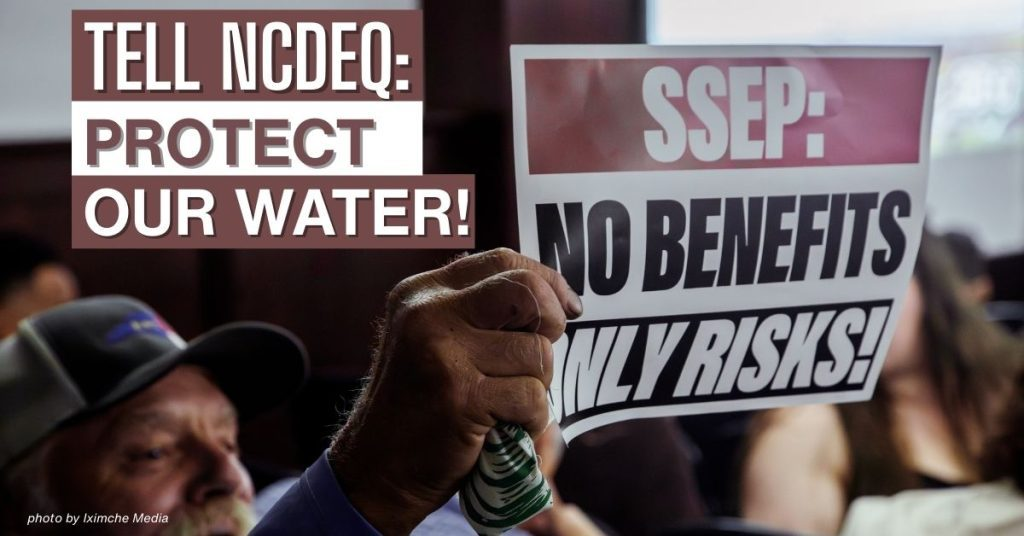
Southeast Supply Enhancement Project (SSEP) Pipeline timeline
Project Overview
The Southeast Supply Enhancement Project (SSEP) is a proposed $1.5 billion methane gas pipeline by Williams-Transco that would transport 1.6 billion cubic feet of methane gas per day through a 42-inch diameter pipeline. The project would cross multiple counties in North Carolina and Virginia, threatening water supplies, environmental health, and community safety.
Key Concerns:
Water Contamination: Pipeline crosses headwaters of Greensboro's water supply reservoirs (Lakes Higgins, Brandt, and Townsend)
Environmental Hazards: Route crosses 1 Superfund site, 2 unlined landfills, 5 inactive hazardous waste sites, and dozens of underground storage tanks
Safety Record: Williams-Transco has one of the worst safety records among gas pipeline operators
Climate Impact: Project would produce nearly 31 million metric tons of carbon emissions annually
Community Impact: Company admits "benefits are not realized by those who are impacted"
Timeline of Community Action
2025
June 6, 2025 - MAJOR VICTORY: Guilford County Resolution Passes 9-0
Guilford County Board of Commissioners unanimously passed a bipartisan resolution expressing safety concerns over SSEP
Resolution will be submitted to FERC and NC General Assembly
Second local government to take action (after Town of Midway)
Over 1,000 community voices represented opposition across diverse demographics
May 16, 2025 - Community Rallies After "Unsatisfactory" Transco Answers
Guilford County Commissioners work session with Transco-Williams representatives
Commissioners Mary-Beth Murphy and Frankie Jones Jr. asked hard-hitting questions about water quality, stream crossings, and environmental impact
Transco reps couldn't answer questions or deferred to FERC process
Project manager admitted not knowing how many streams would be crossed
Community advocates responded with public comments
Critical phase identified: Community organizing intensifies for resolution passage
May 14, 2025 - Action Against Senate Bill 472
SB 472 threatens water quality protections: Would require NC DEQ to waive 401 certification after only 5 days
Bill eliminates public engagement and removes NC's primary water quality protection tool
Community call-in event was organized on May 15, 1:00-1:30pm
May 2, 2025 - Record Turnout at Guilford County Commissioners Meeting
Largest crowd yet: Over 24 community members attended
9 out of 10 speaker slots filled with NOSSEP advocates
Diverse speakers included:
Three impacted Oak Ridge landowners
Environmental science professor from Greensboro College
Three concerned Greensboro residents/parents
Three core NOSSEP team members
Commissioner "Skip" Alston announced work session with Transco for May 15th
Community organized around "All risks, no benefits" message
April 25, 2025 - Earth Week Community Education
Two Earth Day events April 26th
Focused on Oak Ridge impacts in Haw River watershed
Educational outreach on water supply threats to Greensboro's reservoirs
April 18, 2025 - New Community Organizer Introduction
Aidan Loretz introduced as Haw River Assembly's new Community Organizer
NOSSEP coalition formation across North Carolina environmental justice organizations
February 21, 2025 - FERC Comment Period Opens
Direct comment submission system established for FERC
30-day comment period (advocates pushed for 90 days)
Environmental Assessment planned (advocates demand Environmental Impact Statement)
Oak Ridge community meeting scheduled for February 25th
2024
December 2022 - Winter Storm Elliott Analysis
Natural Resources Defense Council analysis showed 65% of gas plant outages in PJM region due to plant failures
Gas production fell 20% due to freezing wells
Evidence contradicts Transco claims about pipeline necessity
Key Government Actions Needed
Federal Level - FERC
Demand full Environmental Impact Statement (not just Environmental Assessment)
Extend comment period to 90 days
Hold public hearings in each affected county
Assess "no-action alternative"
Consider cumulative impacts in addition to the MVP Southgate pipeline
State Level - North Carolina
Oppose Senate Bill 472 limiting environmental review time
Protect 401 water quality certification process
Enforce state carbon reduction laws
Local Level
Guilford County: Resolution passed unanimously!
Town of Midway: Opposition resolution passed May 5, 2024
Oak Ridge: Community pressure ongoing
Forsyth County: Organizing in progress
Organizations Leading Opposition
Haw River Assembly, Sierra Club NC, 7 Directions of Service, Mothers Out Front, NOSSEP Coalition, CleanWaterNC
How to Get Involved
Submit FERC Comments: Docket No. CP25-10-000
Contact Local Representatives: Demand resolutions opposing SSEP
Attend Community Meetings: Stay informed and show support
Sign Petitions: Available at nossep.org
Contact State Legislators: Oppose SB 472 and similar bills
Get in touch!
Website: nossep.org
Contact: aidan@hawriver.org for Guilford County organizing
First Post:
January 2025:
Transco Southeast Supply Enhancement Project (SSEP): A New Threat
The Haw River Assembly is now mobilizing against a new pipeline threat to our region, and the headwaters of the Haw River. Williams Companies has proposed an enormous expansion to their existing Transcontinental (Transco) pipeline called the Southeast Supply Enhancement Project (SSEP). This massive project would pump 1.6 billion cubic feet of methane gas daily through a 42-inch diameter high-pressure pipeline spanning five states, including North Carolina. The proposed route would run approximately 28 miles through Rockingham, Guilford, Forsyth, and Davidson Counties, threatening many of the same families and waterways already at risk from MVP Southgate. Additionally, SSEP would significantly increase capacity at gas-fired compressor stations in Iredell and Davidson Counties.
Transco has one of the worst pipeline safety records in the industry. Methane leaks from pipelines contaminate air, water, and soil, causing harmful health effects and environmental damage. The project offers no economic benefits to local communities along the route—residents would not receive gas from SSEP, few permanent jobs would be created, and property values would likely decrease. Williams Companies plans to file their application with the Federal Energy Regulatory Commission (FERC) in late 2024, with construction potentially starting in spring 2026.
In May 2024, communities in New York successfully defeated Transco's Northeast Supply Enhancement Project. This victory, along with our previous successes against the Atlantic Coast Pipeline and Chickahominy Pipeline, demonstrates that organized communities can stop unnecessary fossil fuel infrastructure projects. Visit nossep.org to learn more about this threat and join our resistance efforts.