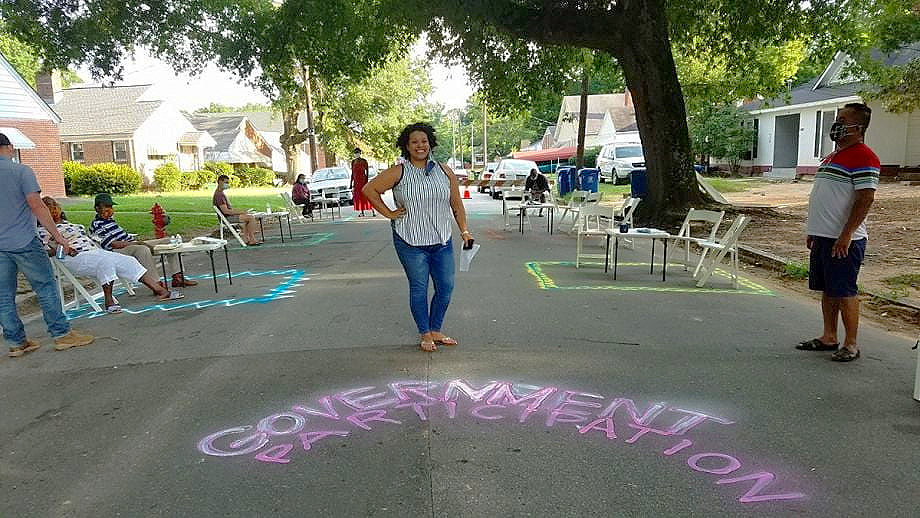
(Photo: Covid community gathering on the street in East Durham)
For 23 years, Aidil Ortiz has lived in East Durham, intentionally rooting herself deeply within her community. She chose this neighborhood for its cultural texture. This is the kind of place where a nurse lives next to a plumber, a teacher next to a cook, and where people sit on porches actually talking to and showing up for one another. Sweetly, Aidil smiled as she said, “You can walk your dog with a bonnet and still feel beautiful.” These neighbors know each other by name and by heart.
“Wherever you live, you have to be a steward of that community," Aidil said. She didn't move to East Durham because she was looking for a fight. She moved there because it felt like home; she can hear the sound of the train in the distance and the trees frame her view of people meandering up and down Driver Street.
No one would move to a community they knew was poisoned. Brenntag, however, has been poisoning the creek behind Burton Magnet Elementary School for years. Once Aidil was faced with that reality, she couldn't look away.
Community organizing is not always a sexy pursuit. Aidil says it’s the everyday acts that really matter.
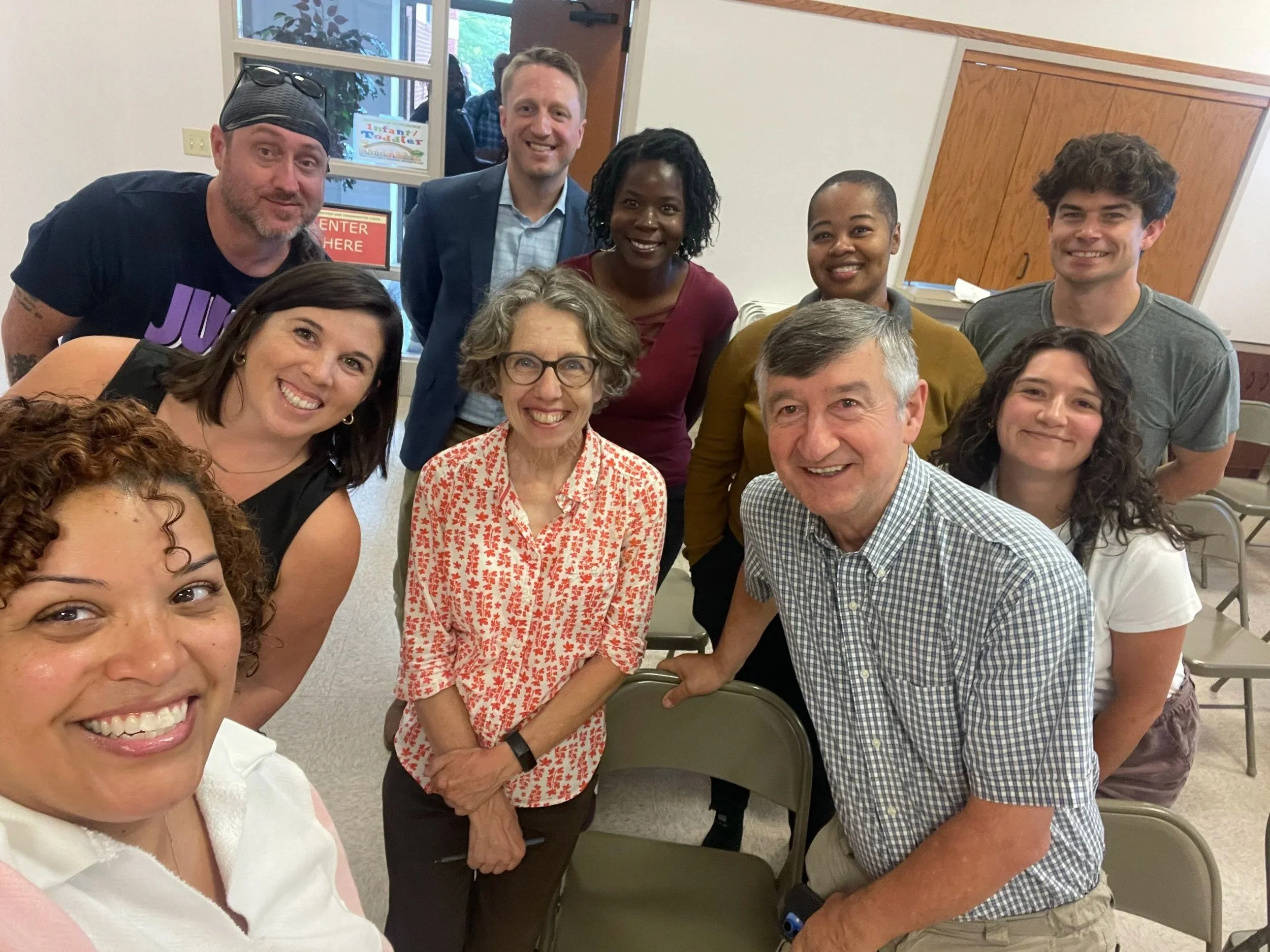
Community Meeting, October 2025
Some of Aidil’s gifts are skills that should never be overlooked in community organizing work. She is good at reading comprehension, calling a meeting, booking a room, and facilitating conversation. She is good at writing notes and sending them back to attendees. This follow up is key to making sure people feel connected. She also has a master's degree in counseling and brings that trauma-informed, relational approach to everything she does. She knows how important it is to connect the expertise of lived experience with other kinds of experts for an empowering outcome.
In her work, Aidil creates what she calls "magic in the mundane." She encourages her neighbors to download the Durham One Call app. There, they can report smelly water pollution, overgrown bushes, or clogged storm drains. She wants people to take their every day walks through the neighborhood with their phone and app open, logging issues they encounter so it doesn’t feel like an extra chore. This app provides a documented record of evidence; decision makers and city staff are held accountable for these records.. Aidil has gone herself to the city council meetings and brings a friend or two along. Everyone works together on what to say and if folks need a nudge before getting on the mic, she is happy to offer that in many different forms.

(Photo: Community Meeting 2025)
Aidil has been an important convener in East Durham. She stewards the neighborhood listserv (16 years strong with her neighbor Chloe!). She puts signs in yards and plugs flyers into food boxes at food distribution events.
Environmental injustices show up as patterns in real time.
For twenty years, Aidil has watched environmental issues pile up in her community: lead paint in old homes, dumping on empty lots, gun violence. These things could seem random and disconnected. However, a few years ago, something changed. Friends called her in a panic: "There's this chemical plume floating over the freeway. It stripped the paint off my car. Are you okay?" Again and again, Aidil saw the same pattern. If we are to make impactful and long-lasting changes, we must acknowledge that these are repeated injustices harming poor, Black and Brown communities, not isolated incidents.

This creek flows near a public recreation center in Durham, N.C. Chemicals from Brenntag have been seeping into the waterway about a half-mile upstream. Credit: Lisa Sorg/Inside Climate News
People posted pictures of the chemical damage on Facebook. Aidil downloaded them and put them into a presentation. She realized these weren't random occurrences in her neighborhood. They were all connected to one source.
She was seeing a multinational corporation in her backyard making choices based on their simple calculation that her neighborhood “didn't matter enough to warrant doing things right.”
In addition to organizing skills, Aidil also brings an understanding of nuance and social complexity to community organizing, things that many people miss. City staff working on this issue are not the CEOs of Brenntag making six-figure salaries. They are also humans who have limited resources, trying to stand up to a multinational corporation. Aidil reminds her neighbors that these folks need the community's support to show that their work matters. "If you put yourself in their shoes," Aidil asks, "what might you need from the general public to keep going?"
In low-income, Black and Brown communities, resources, opportunity, and advocacy are viscerally lacking. Hugely wealthy companies that create harmful waste impacting the environment (and therefore people’s health) often count on that imbalance of power.
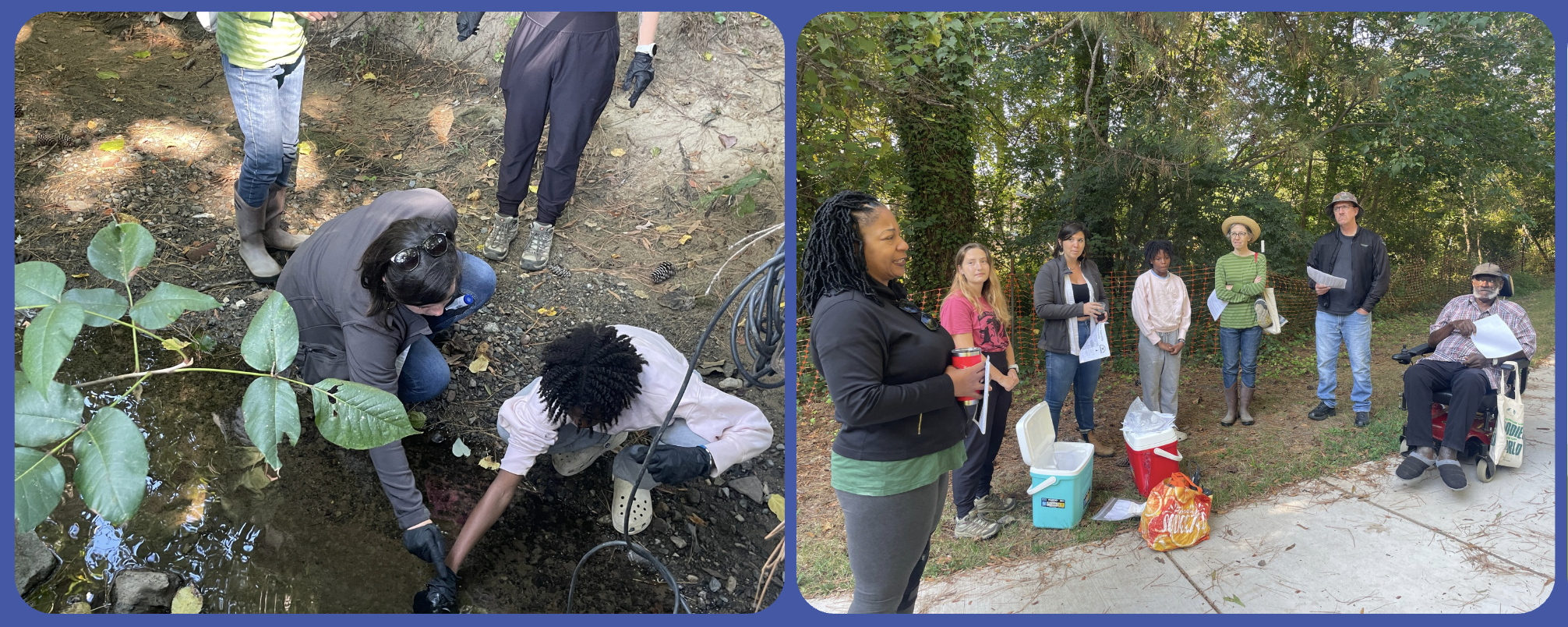
Haw River Assembly & Community Members testing the creek. September, 2025
Brenntag had been discharging these toxins for decades without consequence. In 2023, Haw River Assembly monitored water quality near the Brenntag facility and worked alongside Durham community members, sampling again in 2025 and 2026. In 2026, Haw River Assembly wrote a joint letter with the Mayor of Durham to Governor Josh Stein. In response, the Attorney General, Jeff Jackson, filed a complaint against Brenntag in early June of 2026. The court gave Brenntag 30 days to produce a remediation plan, but after the date passed, Brenntag asked for an extension. Aidil said this company has had 30 years to correct the problem… but needs another 30 days to respond? "I'm generally very impatient with them. They've got tons of resources. If they wanted to do right, they would."
In August, Brenntag agreed to a court order that set new due dates. As of September 3, Brenntag has now submitted the site assessment and Corrective Action Plan and things are beginning to move in the right direction, but there is still much to be done and due dates coming up. This remediation would not have happened without Aidil and her neighborhood stepping up and demanding accountability.
No One Waits Alone
Aidil is clear about what needs to happen. Brenntag should pay to clean up the damage and restore the stream and invest in remediation of the park. They should pay the city back for every dollar spent addressing this problem, staff time included, and pay all fines in full. Those fines go to the school system and could fund community health screenings and education, because this issue has been poisoning the neighborhood for a generation now. They need to be accountable for the problems they’ve caused, because they have the resources.
I asked Aidil what message she would share with the people who support Haw River Assembly and are interested in our work. “Everyone has a part. The right of humans to be healthy and safe is paramount, and every one of us has something to offer towards our health and safety. We should all take up that mantle."
She has found Haw River Assembly essential to how her work has proceeded. Our water testing provided concrete data and a deeper understanding of this issue. Combined with testimony from neighbors who have lived through chemical plumes and poisoned soil and water, we want to tell the story to our broader community and highlight the connections to systemic environmental racism.
Aidil's commitment to East Durham, to the texture and dignity of her community, is what has made her a leader in this fight. She saw what was wrong and decided that looking away was not an option. The people of East Durham are still waiting for justice and together we are making sure they are not waiting alone.
Onward and upstream.
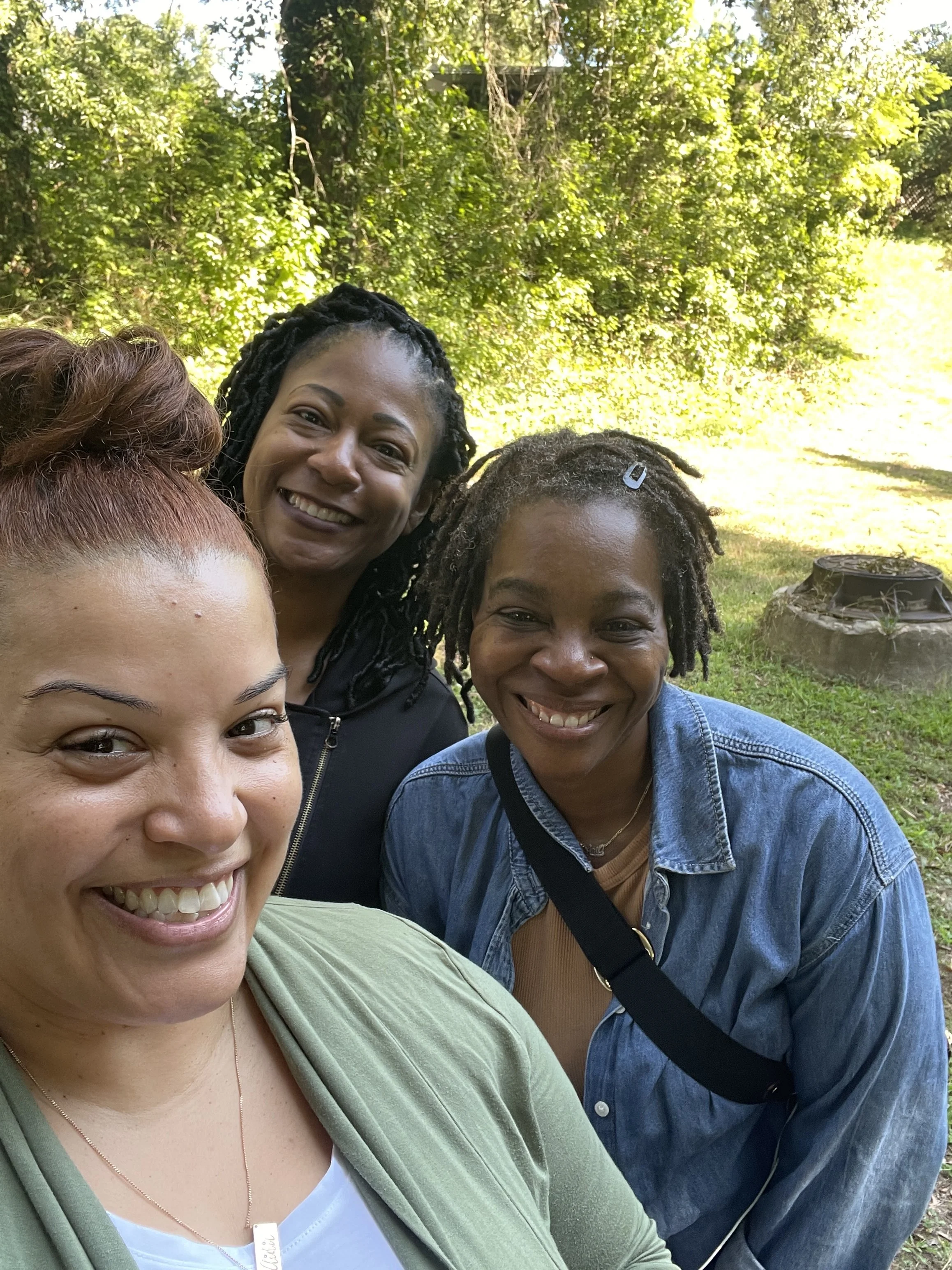
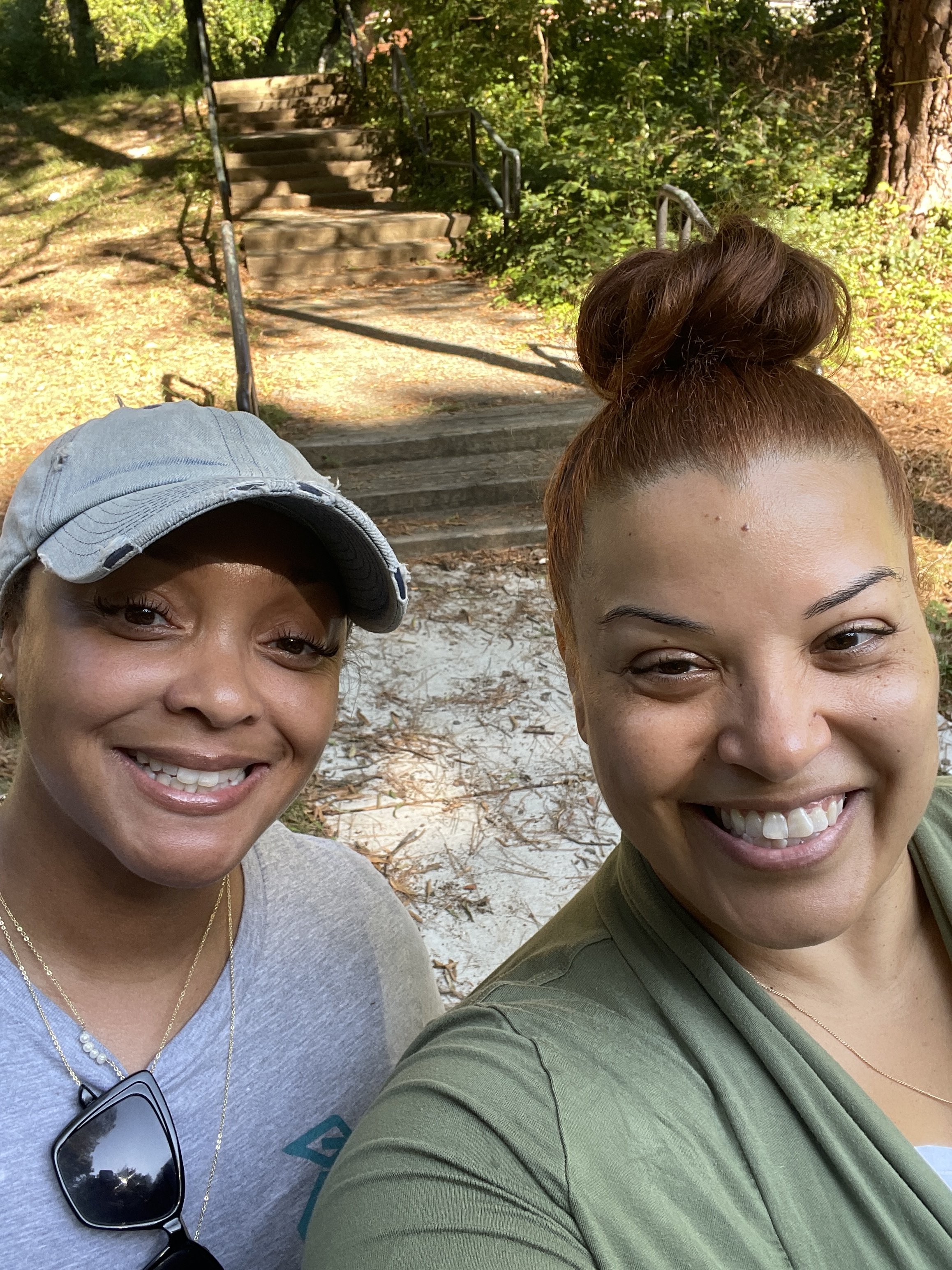
This interview for this story was conducted with Aidil Ortiz via Facetime on August 7th, 2026. (Photo below: Aidil with impacted friends and neighbors.)