

Aidan here! And I have a selection of recent news stories to keep you up to date on the state of these intersecting resistance efforts. We demand a clean energy future for our state! Read on:
FERC's Blanket Certificate Revisions: Why We Do Not Support Them
The Federal Energy Regulatory Commission (FERC), the U.S. government agency responsible for regulating the interstate transmission and wholesale sale of electricity and natural gas, as well as the interstate transport of oil by pipeline, is considering Revisions to the Blanket Certificate Program
We do not support these revisions!
Under these revisions, if a pipeline developer wanted to, they could avoid specific additional permits
This is because the revisions increase the financial threshold requirements for certain certificates
That means these polluters can take more actions with fewer restrictions and less public participation
We are especially concerned that this proposed shortcut would allow larger and more harmful gas infrastructure projects to move forward with little to no scrutiny, less transparency, and fewer opportunities for affected communities to be meaningfully informed or participate. For environmental justice communities, landowners, and communities already living near pipelines and compressor stations, the potential impacts are serious: increased air pollution, noise, construction disturbance, safety risks, cumulative industrial burdens, and reduced ability to understand or challenge projects before construction begins.
Haw River Assembly, in partnership with our Southeast coalition partners, including Southern Environmental Law Center, are signing on to a letter opposing these revisions
We are all thinking ahead on how these revisions could make future fracked-gas pipeline fights increasingly difficult
If they are approved, it would be incredibly disappointing, but in line with waves of federal rollbacks of environmental protections. We will never stop fighting these polluting industries in our watershed and in partnership across the Southeast
Solar-Plus-Storage: A Faster, Cheaper Path Than Duke's Nuclear Dreams
The testimony of engineer Bill Powers, P.E., of San Diego also describes the huge potential for a path that could quickly phase out fossil fuels and protect citizens from Duke’s massive rate hikes. According to Powers, local solar-plus-storage (SPS) installations could be installed at a fraction of the time and cost of new nuclear units – making it the fastest, cheapest, most equitable tool to move North Carolina off its course toward climate and social chaos. Powers’ testimony for NC WARN centers on the following issues:
Duke Energy’s electricity demand forecasts are “poor … consistently inflated and wrong”
Duke Energy’s plans for failure-prone, colossally expensive nuclear reactors rely on “blind faith” that past mistakes won’t be repeated
Duke Energy plans the nation’s largest buildout of fracked gas-burning power plants.
Solar-plus-storage can serve as a cheaper, more reliable alternative to Duke’s plans for new nuclear reactors and fracked gas-fired power plants.
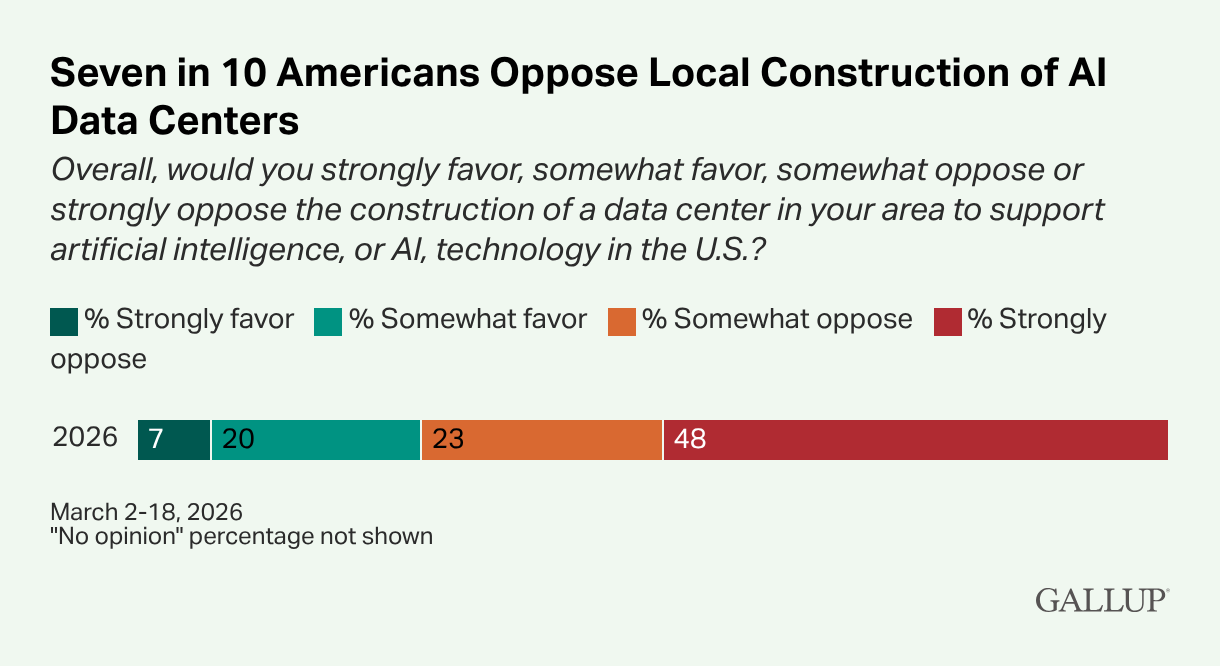
Seven in 10 Americans oppose constructing data centers for artificial intelligence in their local area, including nearly half, 48%, who are strongly opposed. Barely a quarter favor these projects, with 7% strongly in favor.
Data Centers Are Thirsty: The PFAS Problem That HRA Is Talking About
New fact sheet from Food & Water Watch on data centers and PFAS:
Toxic Mixture: Data Centers Turn to PFAS For Cooling
https://www.foodandwaterwatch.org/wp-content/uploads/2026/07/FSW_2607_DataCenterPFAS.pdf
Duke's Rate Hikes and the Data Center Question
NC leaders push Duke Energy to make federal data center pledge legally binding
Gov. Josh Stein and Attorney General Jeff Jackson want Duke Energy to turn its voluntary federal data center pledge into enforceable protections for North Carolina customers.
“Duke just promised the federal government that it won’t shift the cost of data centers onto families,” North Carolina Attorney General Jeff Jackson said. “We agree, but a promise in Washington doesn’t lower a power bill in North Carolina.”
Jackson and Gov. Josh Stein are calling on Duke to make the commitment enforceable through new rate structures approved by the North Carolina Utilities Commission.
Earlier this week, Duke Energy Carolinas reached a proposed settlement with the Utilities Commission’s Public Staff and several other parties that would increase residential rates by approximately 9.5% over two years, according to the Attorney General’s Office.
Jackson declined to join the settlement, arguing the increase remains too high. Duke initially sought an 18% residential increase before reducing its request to about 11.6% and later reaching the proposed settlement.
Take care of yourselves and each other,
~ Aidan Loretz (she/her, they/them)
Haw River Assembly Environmental Justice Community Organizer & 7 Directions of Service Pipelines Campaign Manager
Communities Over Pipelines! Communities Over Corporate Profits!