

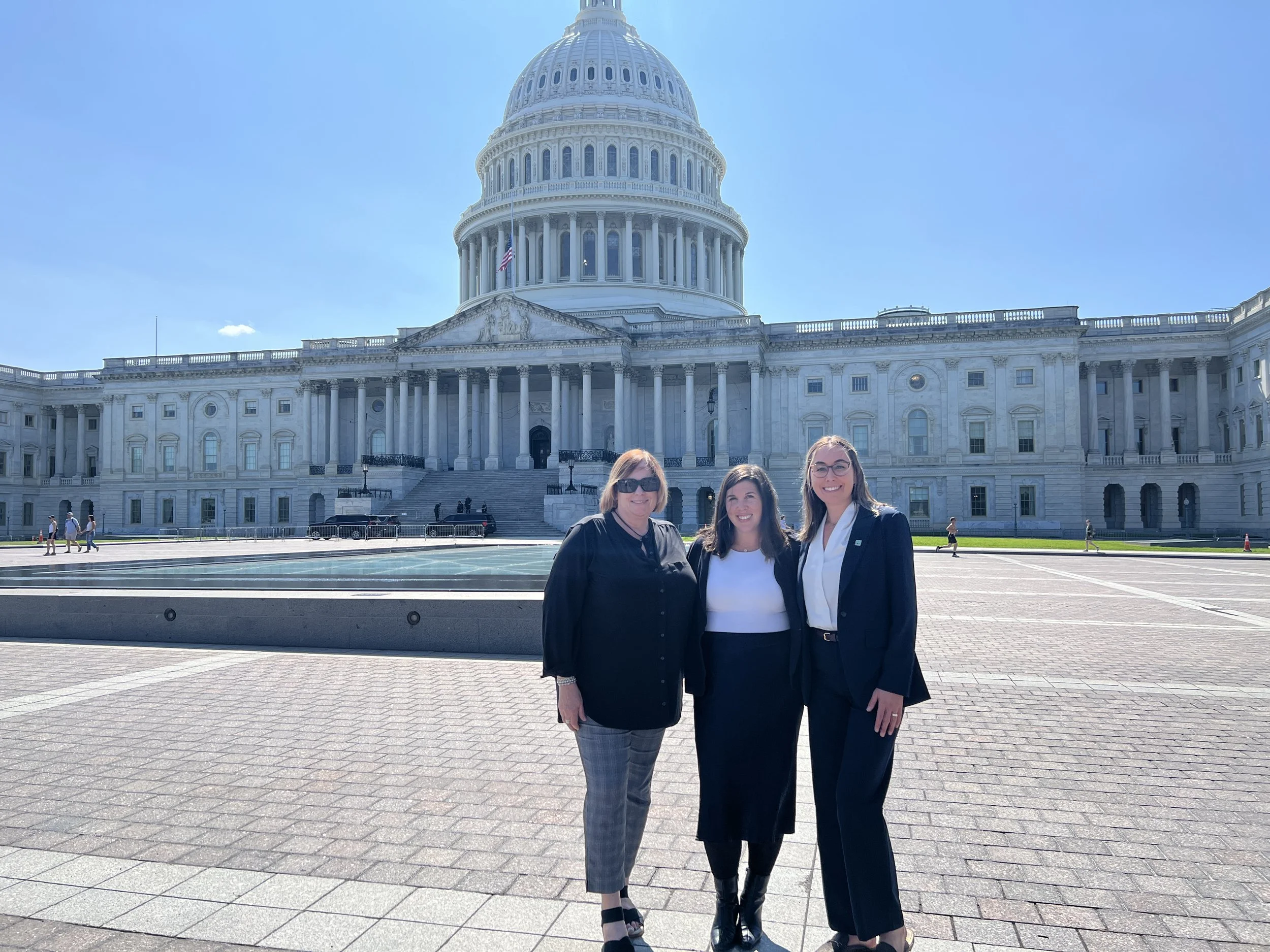
This week, Southern Environmental Law Center convened a congressional briefing on EPA's proposed rollback of PFAS drinking water standards, and I was honored to be included on the panel. I named the communities carrying the weight of these policy rollbacks, not just the statistics behind them.
Our work starts with surface water. We monitor rivers and streams across eight counties in central North Carolina, and that monitoring is the backbone of everything else we do. In communities where pollution broke people's trust, we've also become the ones rebuilding it.
When a family's local government has failed to provide them safe drinking water, we're often the ones who show up with answers, because the drinking water flowing into their homes is sourced from the surface water we're monitoring. We have heavy industry sitting in Greensboro and Burlington, upstream of drinking water for close to a million people downstream. Our watershed also feeds the Cape Fear River, which supplies drinking water to another million people downstream, a population already hit by contamination from Chemours.
We've been working on this fight since 2016. In 2018, we sampled Pittsboro's drinking water and found over 1,200 parts per trillion of total PFAS. EPA's own health advisory level is 0.04 parts per trillion. That's a 30,000-fold gap between what we found and what EPA itself says is safe. It was a crisis, and we went to work immediately, helping the community find alternative water sources while a real fix got built. I sat with mothers afraid to bathe their infants in sink water. I met dads who hauled jugs of water to soccer practice so their kids wouldn't drink from the tap. I talked to kids who'd been told not to fill their water bottles at the school fountain.
That contamination didn't start in Pittsboro. It came from industrial discharge upstream in Burlington. Through litigation we brought, Burlington held the polluters inside its own treatment plant accountable, and that case worked because Burlington's utilities director understood the risk his upstream discharge posed to the community downstream and acted on it. The science is clear. We need regulatory limits on drinking water, and that means setting limits upstream too. Pittsboro still had to spend millions of dollars building GAC treatment systems to remove contamination it never created, and after years of a community not trusting what came out of the tap, that investment is finally rebuilding some of that trust. Take away the federal standard, and towns like Pittsboro lose both the funding path for treatment upgrades and the leverage to go after the source. The burden shifts straight to residents, left to assess their own risk and pay for their own fix.
I also talked about what these standards do for the people running our water systems day to day. EPA is the backstop for states like ours that can't set drinking water standards stricter than federal law. MCLs open utilities up to funding they need to meet new requirements, and they back up the job utility staff already carry, providing safe water for a community they live in too. I told them about Cory, a utility operator who has stayed at his plant overnight more than once to catch and stop a slug of contamination before it ever reached the intake, something only possible because of upstream sampling requirements tied to these standards. MCLs are what let regulators calculate discharge limits upstream in the first place. Take away the standard, and that math loses its foundation entirely.
North Carolina law ties our hands directly to what EPA does. Under G.S. 150B-19.3, state agencies can't adopt environmental rules stricter than federal law once federal law exists on the same subject. Like most states, ours has been hesitant to act on PFAS without EPA leading first. When federal standards disappear, the gap left behind doesn't get filled by anyone else. For states without their own PFAS standards, federal rules are the model they build from, and right now that model is under attack.
Litigation on this rollback is already underway. Communities like Pittsboro and Burlington have already done the hard work of holding polluters accountable and rebuilding trust with their own residents. Federal standards are what made that possible, and pulling them back now would undo it.
The same week I made that case in DC, NC Attorney General Jeff Jackson led a coalition of 17 other states and DC in a 17-page letter demanding EPA reverse course, calling North Carolina ground zero for PFAS contamination. It's true, and we're encouraged that he has put a spotlight on the communities that need these policies the most. That matters when you're the one deciding whether it's safe to bathe your infant in the kitchen sink.
We're not backing off this fight at the federal level, and we're not backing out of the communities living it every day. If you want to know how you can help, reach out to us.