When in Drought: Guidelines for Household Water Conservation
If your county or water system is designated under an Exceptional Drought (the most severe level the state uses), here is what changes for you personally. Much of our northern and middle watershed is in Exceptional Drought, whereas our southern watershed is in Extreme Drought, currently. Follow conditions HERE.
We see that man-made climate change is driving deeper droughts and extreme weather, and that reality does not erase the fact that water scarcity is also shaped by policy choices: which industries get permits, which water users face mandatory cuts versus voluntary requests, and which communities get asked to sacrifice first. Individual conservation matters, and so does demanding that the entities with the largest water footprints, agriculture, golf courses, data centers, and the corporations and lawmakers who permit them, are held to standards that match the scale of what they use.
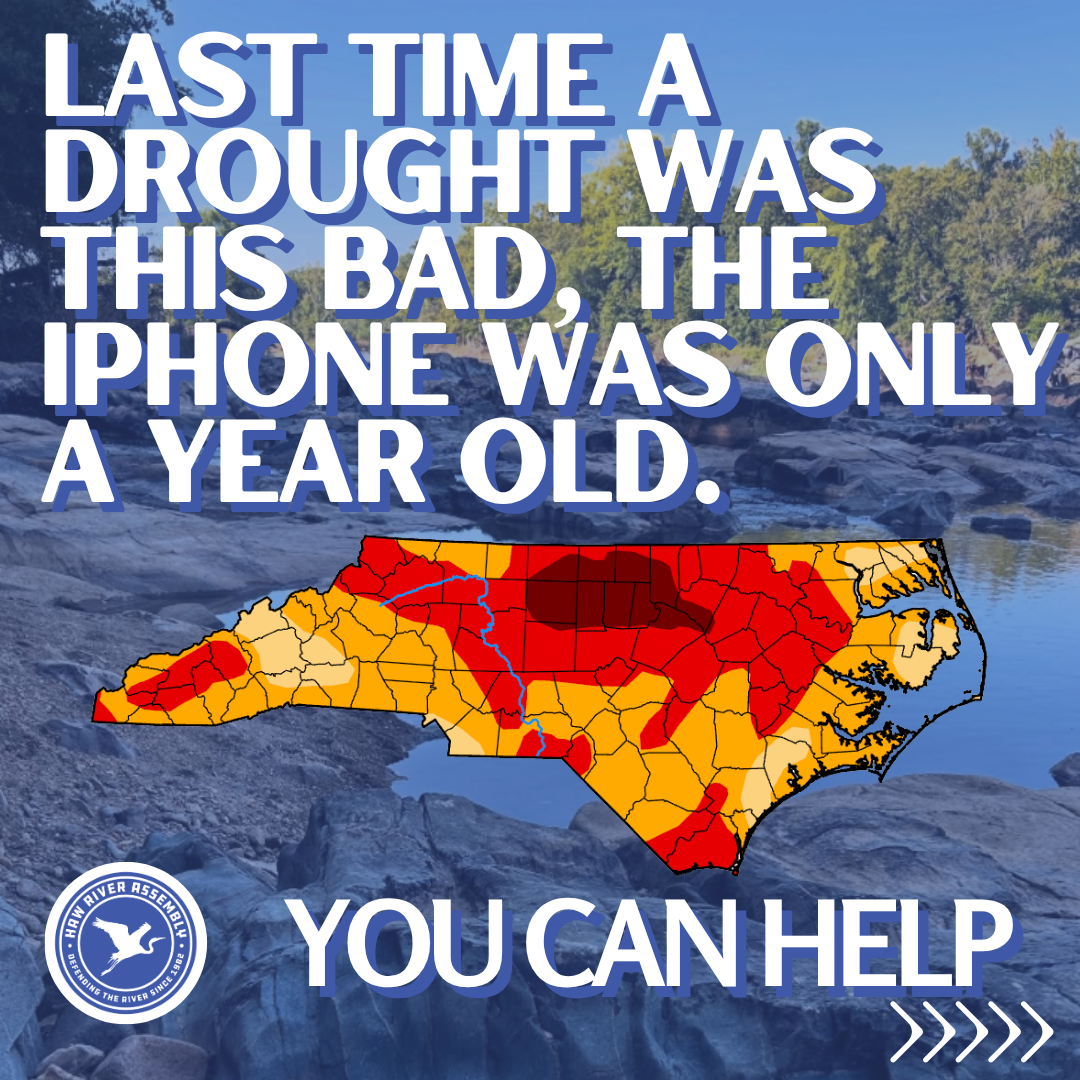
The Big Picture for Households:
Your water utility is required to fall back on a strict set of statewide rules, whether or not they have their own conservation plan. As a household, that means these restrictions apply to you automatically. There is no signing up or opting in. They just take effect.
The guide we’ve put together below is based on North Carolina's official drought rules (15A NCAC 02E .0614) and water conservation guidance from the NC Department of Environmental Quality (ncwater.org), the NC Drought Management Advisory Council (ncdrought.org), and the City of Durham's Water Management Department (durhamnc.gov), where you can also check current local restrictions and enforcement specific to your area.
Ways you can conserve water:
Cut Your Use by at Least 20 Percent
Compare your water use to what you used the month before the drought was declared, and aim for at least a 20 percent reduction. Skip anything that is not essential.
Outdoor Watering Is Mostly Off Limits
Sprinklers and automatic irrigation systems are not allowed at all. A few narrow exceptions exist for hand watering:
You can water a food garden by hand with a hose that has an automatic shutoff, or with drip irrigation, but only between 8 PM and 8 AM.
You can keep existing landscaping barely alive using the same method and the same hours.
If you just planted new landscaping or started an erosion control project before the drought was declared, you get a 28 day window to keep it watered using efficient methods.
Don’t wash your car at home
Washing vehicles yourself is not allowed. Commercial car washes that recycle their water can stay open, so that is still an option if your car really needs it.
Don’t do any power washing
Cleaning your driveway, deck, siding, or any outdoor surface with a power washer is not allowed.
Don’t fill pools or hot tubs (hot tubs… in this heat?)
This includes inflatable kiddie pools, hot tubs, and spas. The only exception is if a doctor has prescribed it for a medical reason.
Only fill your pond or fountain to keep the fish alive
If you have a backyard pond or fountain, it has to stop running, except for the minimum water needed to keep fish or other aquatic life from dying.
At Restaurants
You will only get a glass of water if you ask for one. Restaurants are not allowed to bring it automatically.
Small Changes That Add Up
The state rule sets the floor, but plenty of everyday habits can stretch your household's water further, drought or not.
In the kitchen:
Fix dripping faucets. A single drip can waste thousands of gallons a year.
Keep a pitcher of water in the fridge instead of running the tap until it's cold.
Only run the dishwasher with full loads, and skip pre-rinsing. Scrape plates clean and let the machine do the work.
Thaw frozen food in the fridge, not under running water.
In the bathroom:
Turn off the tap while you brush your teeth or shave.
Listen for a running toilet. A leaky flapper valve can waste a surprising amount of water and is usually a cheap fix.
Take shorter showers, and consider a low-flow showerhead if you do not have one already.
Outdoors, within the rules above:
Water at the roots, not the leaves, to cut down on evaporation.
Add mulch around plants to hold moisture in the soil longer.
Choose drought-tolerant plants where you can.
Skip the hose on driveways and sidewalks. A broom does the job just as well.
Why This Matters
These restrictions exist because drought conditions strain everyone's water supply at once: farms, drinking water systems, wildlife, and rivers like the Haw. Cutting back at home is one of the most direct ways that we, as individuals, can help reduce that strain.
Sources:
15A NCAC 02E .0614, https://www.ncdrought.org/ Default Water Use Reduction Measures During NCDMAC Exceptional Drought Designations, North Carolina Drought Management Advisory Council
North Carolina Department of Environmental Quality, ncwater.org, Water Conservation Tips
City of Durham, Durham Saves Water and Water Management Stage 2 reporting, durhamnc.gov, https://www.durhamnc.gov/m/newsflash/Home/Detail/4184 accessed June 24, 2026
City of Graham, Water Conservation, https://www.cityofgraham.com/city-of-graham-encourages-voluntary-water-conservation/, accessed June 24, 2026
WRAL, "Durham implements Stage 2 water restrictions as Lake Michie hits 40% full," https://www.youtube.com/watch?v=xKcPDJMKqMI June 17, 2026
WUNC, "Durham to activate Stage 2 Water restrictions next week due to worsening drought conditions," https://www.msn.com/en-us/weather/general/107-complaints-filed-as-durham-enters-week-two-of-water-restrictions/ar-AA26nHBk June 2026