Water, Power, Profit: The True Cost of Data Center Expansion in NC
March 13, 2026 - Emily Sutton, Haw Riverkeeper and Haw River Assembly Executive Director
Data center expansion is a major concern for communities across the state. North Carolina is one of the few states without water withdrawal permitting. While registration is required for non-agricultural users who withdraw more than 100,000 gallons per day, the process makes it very easy for industries like data centers to pull enormous amounts of surface water from rivers to cool their machines.
Additionally, North Carolina offers three tax exemptions for data centers, including exemptions on electricity and support equipment, electricity use, and business property purchases, as well as computer software.
Our elected representatives have enacted policies that make our state very attractive to data centers, yet we have no policies in place to protect our communities, ecosystems, or the resources we all depend on. The astronomical increase in energy use is being subsidized by residential ratepayers, coal plants are being reopened, and sustainable energy goals have been undermined to accommodate this expanding industry.
While outright bans on specific industries are difficult to enact, our local and state governments can and must pass policies to limit data center expansion and prioritize communities over corporate profits. We are pushing for moratoriums on data centers in our watershed to buy time to better understand the scope of this expansion and develop policy recommendations that require data centers to limit water and energy use.
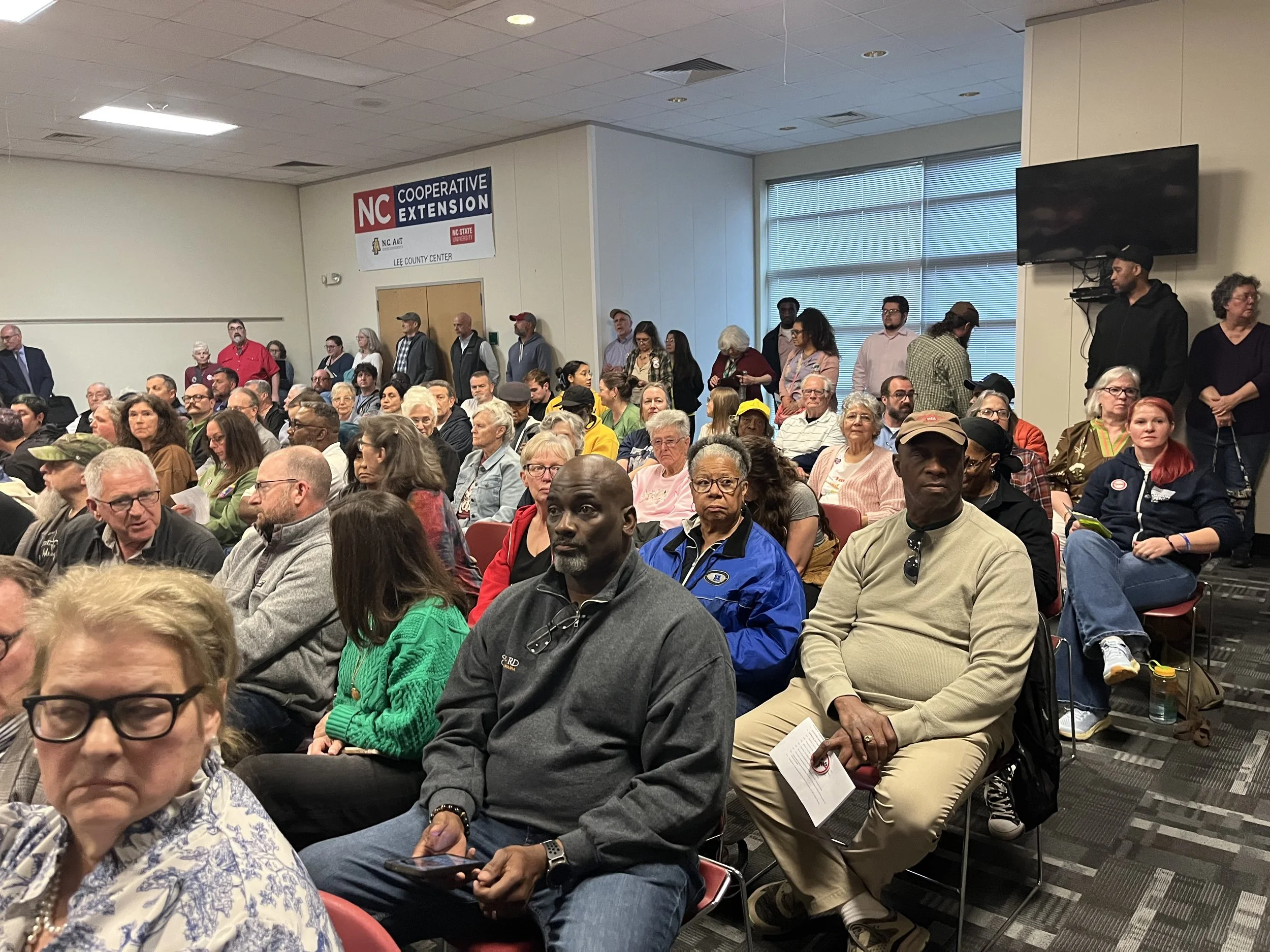
We were thrilled to see that the persistence of organized communities in New Hill paid off last week, when a proposed data center withdrew its application. Meanwhile, we have successfully secured a moratorium in Chatham. This Monday, March 16, we will partner with our watershed neighbors in Lee County to advocate for another moratorium.
While these moratoriums are not the final solution to confronting data centers, they serve as a critical tool. They give our elected officials more time to understand the industry, explore ways data centers can operate with minimal environmental harm, and enact policies that prioritize the health and safety of our communities.
Below: Large crowd, standing room only in Lee County opposing Data Centers and Fracking. Photo credit: Steph Gans with Clean Water for NC